Types of Erectile Dysfunction and Treatment in Haryana
Erectile dysfunction (ED) affects approximately 30 million men in the United States, and its prevalence increases with age, making it one of the most common male sexual health conditions worldwide.
Erectile dysfunction (ED) is the persistent inability to achieve or maintain an erection sufficient for satisfactory sexual activity. It is often a symptom of an underlying health condition rather than a disease itself. Factors such as diabetes, high blood pressure, heart disease, hormonal imbalance, stress, and certain lifestyle habits can all contribute to ED. Understanding the different erectile dysfunction types and identifying the underlying cause are essential for selecting the most effective treatment.
If you are experiencing persistent erection problems, seeking timely erectile dysfunction treatment in Haryana can help improve sexual health and overall well-being. An experienced urologist can perform a comprehensive evaluation and recommend a personalized treatment plan depending on your condition.
Types of Erectile Dysfunction
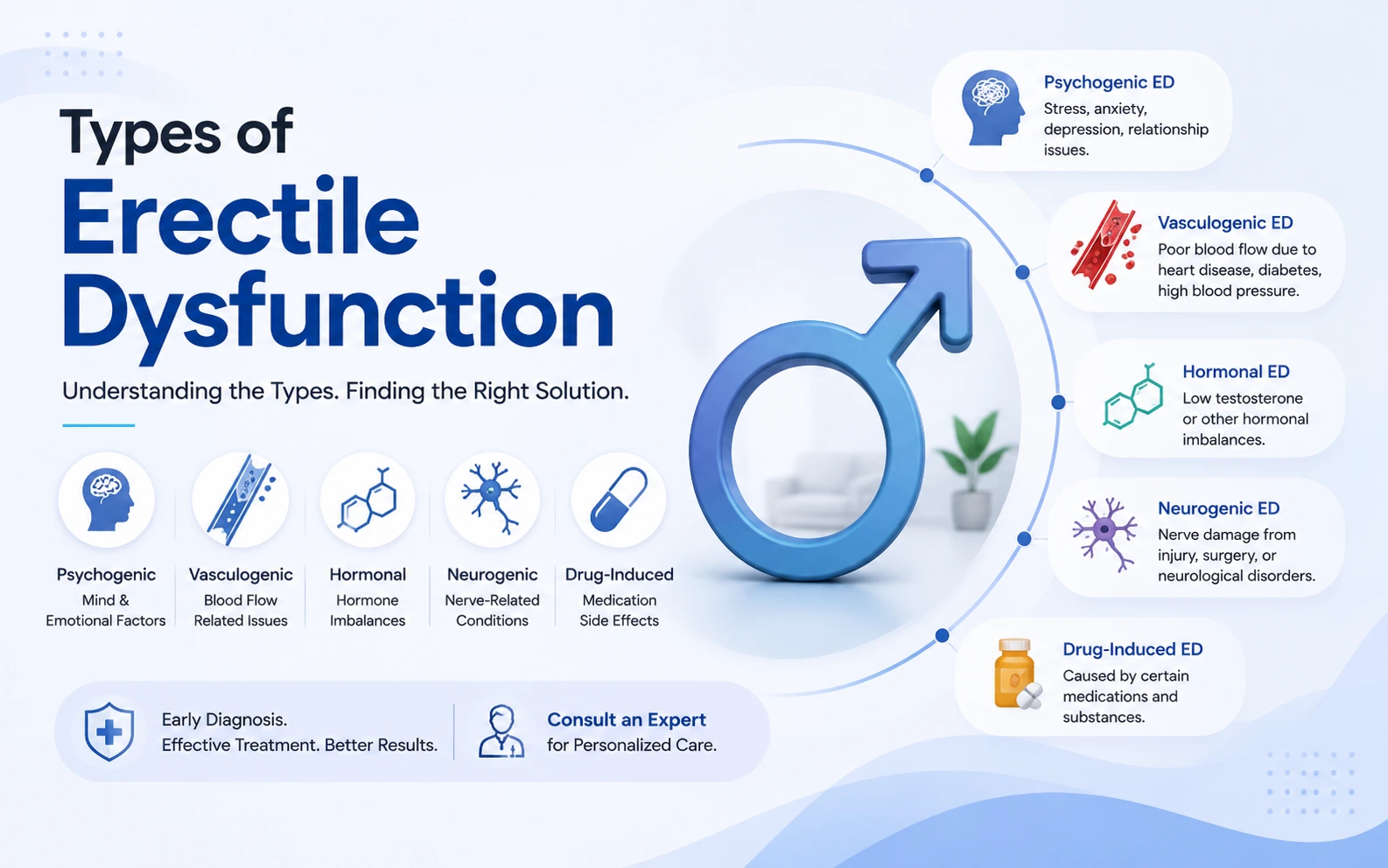
Erectile dysfunction (ED) is not the same for every patient. It can result from problems affecting blood vessels, nerves, hormones, psychological health, or a combination of these factors. Understanding the different erectile dysfunction types helps doctors identify the root cause and develop an effective treatment plan.
| Type of Erectile Dysfunction | Description | Common Causes |
|---|---|---|
| Vascular Erectile Dysfunction | Reduced blood flow to the penis prevents a firm erection. | Diabetes, high blood pressure, high cholesterol, heart disease, smoking, obesity |
| Neurogenic Erectile Dysfunction | Damage to the nerves that control erections interferes with normal sexual function. | Stroke, spinal cord injury, multiple sclerosis, pelvic surgery, diabetes-related nerve damage |
| Hormonal Erectile Dysfunction | Hormonal imbalances reduce sexual desire and affect the ability to achieve or maintain an erection. | Low testosterone, thyroid disorders, pituitary disorders |
| Psychogenic Erectile Dysfunction | Emotional or psychological factors interfere with normal sexual function despite healthy physical structures. | Stress, anxiety, depression, relationship problems, performance anxiety |
| Mixed Erectile Dysfunction | A combination of physical and psychological factors contributes to erectile dysfunction. | Diabetes with anxiety, cardiovascular disease with depression, aging with multiple health conditions |
Common Causes and Risk Factors of Erectile Dysfunction
Erectile dysfunction causes can be physical, psychological, or a combination of both. An erection depends on healthy blood flow, normal nerve function, balanced hormone levels, and emotional well-being.
Common Physical Causes of Erectile Dysfunction
Several medical conditions can increase the risk of ED, including:
-
Diabetes: High blood sugar can damage blood vessels and nerves that control erections.
-
High blood pressure: Reduced blood flow to the penis can make it difficult to achieve or maintain an erection.
-
Heart disease and high cholesterol: Narrowed or blocked arteries can affect blood circulation.
-
Hormonal disorders: Low testosterone and thyroid disorders may reduce sexual desire and erectile function.
-
Neurological disorders: Conditions such as stroke, Parkinson's disease, multiple sclerosis, and spinal cord injuries can interfere with nerve signals.
-
Certain medications: Some medicines used to treat high blood pressure, depression, anxiety, or prostate conditions may contribute to erectile dysfunction.
Symptoms and Diagnosis of Erectile Dysfunction
The symptoms of erectile dysfunction (ED) can vary from occasional difficulty maintaining an erection to persistent problems that affect sexual activity and quality of life.
Common Symptoms of Erectile Dysfunction
Men with ED may experience:
-
Difficulty achieving an erection
-
Trouble maintaining an erection during sexual activity
-
Reduced sexual desire (low libido)
-
Erections that are not firm enough for satisfactory intercourse
-
Anxiety or reduced confidence related to sexual performance
-
Difficulty maintaining intimacy because of recurring erection problems
If these symptoms persist for several weeks or occur repeatedly, they should not be ignored. A medical evaluation can help determine whether the problem is physical, psychological, or a combination of both.
How Is Erectile Dysfunction Diagnosed?
An experienced urologist will perform a comprehensive assessment that may include:
-
A detailed medical and sexual history
-
Physical examination
-
Blood tests to check blood sugar, cholesterol, and kidney function
-
Hormone tests, including testosterone levels when indicated
-
Urine tests to identify underlying medical conditions
-
Penile Doppler ultrasound, if blood flow abnormalities are suspected
-
Psychological assessment when stress, anxiety, or depression may be contributing to symptoms
These investigations help identify the underlying erectile dysfunction causes and guide the selection of the most appropriate treatment.
Erectile Dysfunction Treatment in Haryana
The most effective erectile dysfunction treatment in Haryana depends on the underlying cause of the condition.
Lifestyle Modifications
For many men, improving general health can significantly improve erectile function. Your doctor may recommend:
-
Maintaining a healthy body weight
-
Exercising regularly
-
Quitting smoking
-
Limiting alcohol intake
-
Managing diabetes, high blood pressure, and cholesterol
-
Following a balanced diet
-
Reducing stress and getting adequate sleep
Prescription Medications
Erectile dysfunction pills are often the first treatment option for eligible patients. These prescription medicines improve blood flow to the penis and help achieve and maintain an erection during sexual stimulation.
However, these medications:
-
Should only be taken under medical supervision
-
Are not suitable for men taking nitrate medications for heart disease
-
May not be appropriate for individuals with certain cardiovascular conditions or other medical illnesses
Psychological Counselling
In many cases, combining psychological support with medical treatment provides better long-term results, particularly for men with psychogenic or mixed erectile dysfunction.
Advanced Treatment Options
When lifestyle changes and medications are not effective, additional treatments may include:
-
Vacuum erection devices to help achieve an erection mechanically
-
Penile injections that increase blood flow directly to the penis
-
Hormone replacement therapy for men diagnosed with testosterone deficiency
-
Penile implant surgery for severe erectile dysfunction that does not respond to other treatments
Erectile dysfunction is a common and treatable condition that can result from vascular, hormonal, neurological, or psychological factors. Understanding the types of erectile dysfunction and identifying the underlying cause are essential for choosing the most effective treatment. Whether your symptoms are occasional or persistent, early medical evaluation can improve sexual health, identify associated medical conditions, and help prevent future complications.
If you are looking for expert erectile dysfunction treatment in Haryana, the specialists at SS Kidney and Urology Hospital provide confidential evaluation and personalized care for men experiencing erectile dysfunction.
Book your consultation at SS Kidney and Urology Hospital today and take the first step toward effective treatment, improved sexual health, and a better quality of life.
FAQs
What are the main types of erectile dysfunction?
The main types include vascular, neurogenic, hormonal, psychogenic, and mixed erectile dysfunction. Each type has different underlying causes ranging from blood flow problems to nerve damage, hormonal imbalance, or psychological factors.
Can erectile dysfunction be caused by diabetes?
Yes. Diabetes can damage the blood vessels and nerves that control erections, making it one of the most common causes of vascular and neurogenic erectile dysfunction.
Is erectile dysfunction always a physical problem?
No. Erectile dysfunction can be physical, psychological, or a combination of both. Psychogenic erectile dysfunction results from stress, anxiety, depression, or relationship problems, even when physical health is normal.
How is erectile dysfunction diagnosed?
Diagnosis typically involves a detailed medical and sexual history, physical examination, blood tests, hormone tests, urine tests, and sometimes a penile Doppler ultrasound or psychological assessment to identify the underlying cause.
What treatment options are available for erectile dysfunction in Haryana?
Treatment options include lifestyle modifications, prescription medications, psychological counselling, vacuum erection devices, penile injections, hormone replacement therapy, and penile implant surgery for severe cases.
When should I see a urologist for erectile dysfunction?
You should consult a urologist if erection difficulties persist for several weeks or occur repeatedly, especially if accompanied by reduced libido, performance anxiety, or other symptoms affecting sexual health and confidence.
Can erectile dysfunction be treated without medication?
Yes, in many cases. Lifestyle changes such as weight management, regular exercise, quitting smoking, reducing alcohol intake, and managing underlying conditions like diabetes or high blood pressure can significantly improve erectile function.




Request A Callback