
Stages and Symptoms of Kidney Disease in Men and Women
Chronic kidney disease (CKD) is classified into 5 stages based on eGFR levels, with Stage 5 defined as kidney failure when kidney function drops below 15 eGFR as per American Kidney Fund. Globally, CKD affects an estimated hundreds of millions of people, making early detection critical for preventing irreversible damage.
Kidney disease often develops silently, especially in early stages like Stage 1 and Stage 2, where symptoms are mild or not noticeable. Stage 2 CKD is identified when kidney function falls between 60–89 eGFR, even though many patients may still feel normal.
Delayed diagnosis is a common concern because early symptoms are often ignored. This leads many patients to discover the condition only after significant kidney damage has already occurred.
The progression from mild symptoms to advanced kidney failure involves gradual signs such as fatigue, swelling, changes in urination, and loss of appetite. In later stages, dialysis or kidney transplant becomes necessary.
This article explains the 5 stages of kidney disease, symptoms in men and women, Stage 2 warning signs, life expectancy in Stage 5, and where to find kidney hospitals and nephrology specialists in Haryana, helping readers identify risks early and take timely medical action.
5 Stages of Kidney Disease Explained in Haryana
As kidney function declines, the stage number increases, indicating more severe damage. Each stage reflects a measurable reduction in kidney performance, even before obvious symptoms appear.
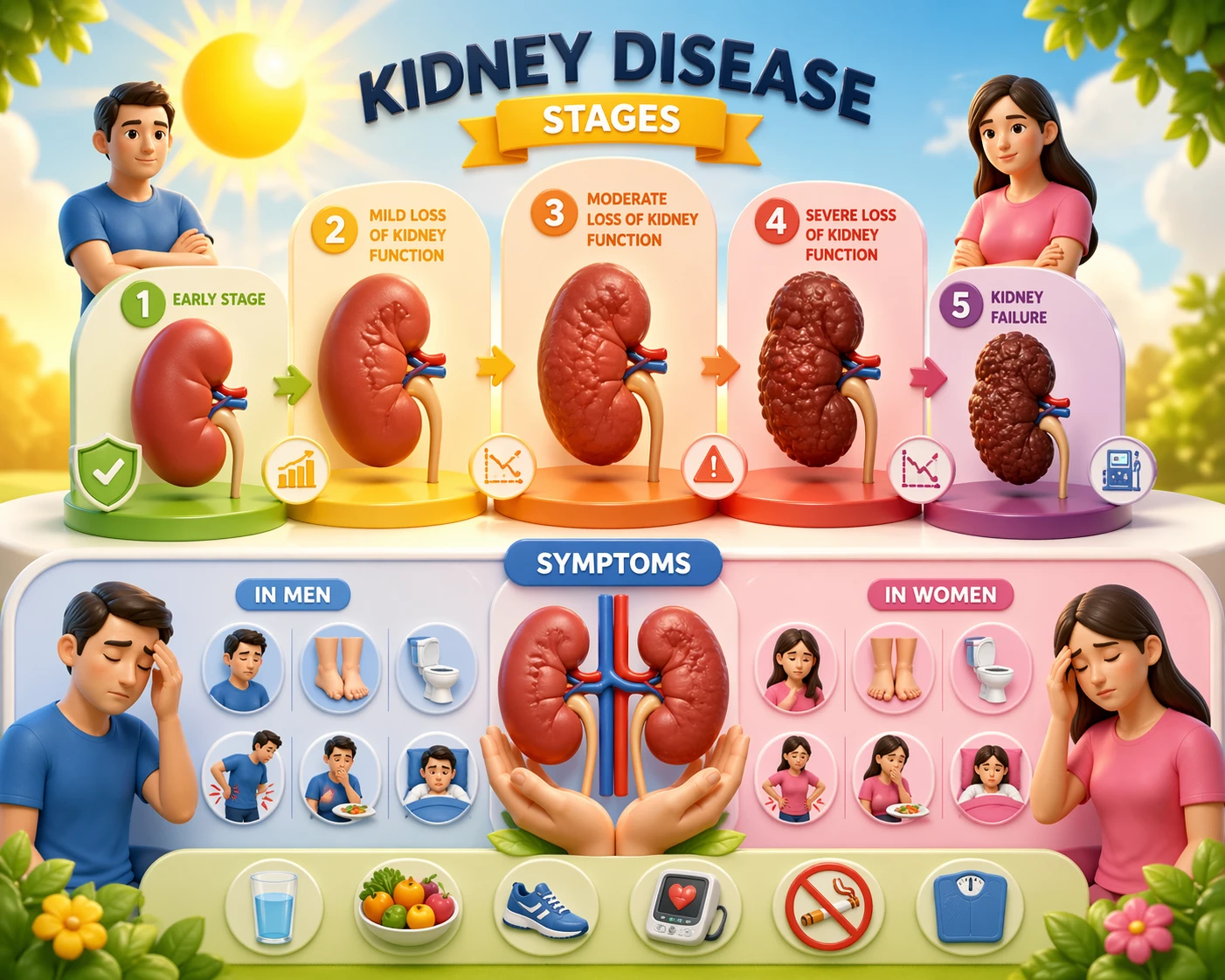
5 stages of kidney disease include:
-
Stage 1 (eGFR 90+): Kidney function is normal or near-normal, but mild kidney damage may exist. Symptoms are usually absent.
-
Stage 2 (eGFR 60–89): Mild reduction in kidney function. Early signs may be subtle and often unnoticed.
-
Stage 3 (eGFR 30–59): Moderate kidney damage. Symptoms like fatigue, swelling, and changes in urination may begin.
-
Stage 4 (eGFR 15–29): Severe loss of kidney function. Symptoms become more noticeable and medical preparation for dialysis may begin.
-
Stage 5 (eGFR <15): Kidney failure stage. Dialysis or kidney transplant is usually required for survival.
Symptoms of Stage 2 Kidney Disease
Stage 2 kidney disease is defined by a mild reduction in kidney function. Even though overall kidney performance is still relatively preserved. In many patients in Haryana and across India, this stage remains undetected because symptoms are subtle or absent.
Common symptoms of Stage 2 kidney disease include:
-
Mild fatigue or reduced stamina during daily activities
-
Slight changes in urination pattern (more or less frequent than normal)
-
Foamy urine due to protein leakage in some cases
-
Mild swelling in feet or ankles (not always present)
-
Occasional back or flank discomfort near kidney area
-
Mild high blood pressure that is difficult to control
Causes and Risk Factors of Kidney Disease
Chronic kidney disease develops when long-term damage reduces the kidneys' ability to filter waste and excess fluid from the blood. In India, including Haryana, most cases are linked to lifestyle diseases and delayed detection.
Major causes and risk factors include:
-
Diabetes (Type 1 and Type 2): High blood sugar damages kidney filtering units over time.
-
Hypertension (High Blood Pressure): Long-term pressure damages blood vessels in the kidneys.
-
Heart disease and poor cardiovascular health: Reduces blood flow to kidneys and accelerates damage.
-
Family history of kidney disease: Increases genetic risk of developing CKD.
-
Frequent use of painkillers (NSAIDs): Long-term use can reduce kidney function.
-
Chronic infections or kidney inflammation: Repeated infections can gradually impair kidney function.
-
Uncontrolled lifestyle factors: Poor diet, obesity, smoking, and low physical activity increase risk.
Life Expectancy After Stage 5 Kidney Disease Dialysis Stage
Life expectancy after Stage 5 kidney disease varies widely depending on treatment type, age, overall health, and associated conditions like diabetes or heart disease.
Key factors affecting survival include:
-
Whether the patient is on regular dialysis
-
Access to timely and quality medical care
-
Control of underlying diseases like diabetes and hypertension
-
Nutritional status and lifestyle management
General medical observation:
-
With regular dialysis treatment in Haryana, many patients survive 5–10 years or more, depending on health condition.
-
Without dialysis or transplant, survival may reduce significantly, often to a few weeks or months.
Dialysis does not cure kidney failure but helps perform the kidney's filtering function, allowing patients to maintain life. Kidney transplantation offers better long-term outcomes for eligible patients.
Chronic kidney disease progresses through 5 defined stages based on eGFR levels. In Haryana and across India, early stages often remain undetected because symptoms are mild or absent.
Stage 2 kidney disease may show subtle signs like fatigue, slight changes in urination, or mild swelling, while later stages develop more severe symptoms such as nausea, fluid retention, and significant weakness. Without timely diagnosis, the condition can progress silently to kidney failure requiring dialysis or transplant.
Men and women experience similar symptoms, but differences in health conditions like diabetes, hypertension, and delayed diagnosis can affect progression speed and detection timing. This makes regular screening and early medical consultation essential for prevention.
If you are experiencing symptoms like swelling, changes in urination, fatigue, or high blood pressure, early consultation with a kidney specialist is critical.
SS Kidney and Urology Hospital in Haryana provides focused care for kidney and urinary tract diseases with specialized nephrology support.
Early diagnosis can prevent progression to kidney failure. Visit SS Kidney and Urology Hospital, Haryana for timely evaluation and specialized kidney care.







Request A Callback