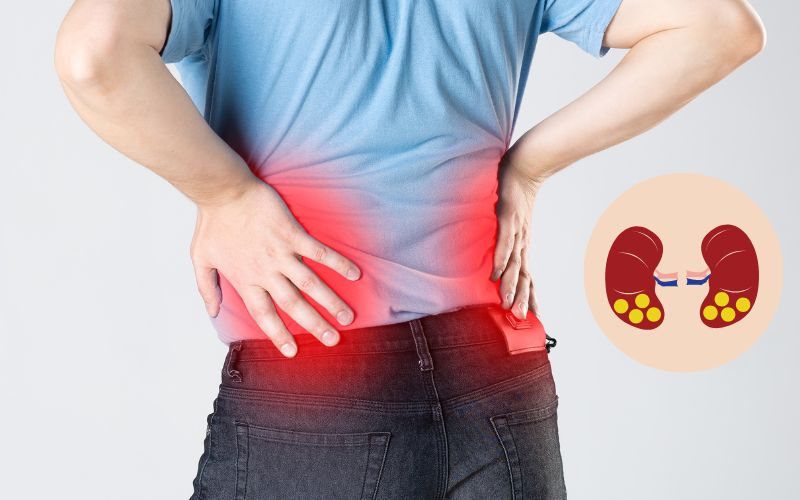
Side-Lying Position with Knees Bent: Lying on your side with your knees slightly bent can help alleviate kidney stone pain. This position reduces pressure on the kidneys and can facilitate the movement of the stone through the urinary tract. It's important to alternate sides to prevent prolonged pressure on one kidney.
Pain Relief Position for kidney stone patients
The kidneys produce hard mineral buildups that appear inside these organs. If kidney stones enter the ureter they produce painful sensations known as renal colic. People with kidney stones generally report stabbing and contracting agony starting in their flank region and moving through their lower abdomen to the groin area. The levels of pain come and go in pulses that vary between 20 and 60 minutes long.
The stone moves through the ureter by making the organ spasm. It tries to push out the stone which results in painful twitches. The kidney pressure increases when urine builds up because the stone blocks the ureter.
How Body Mechanics Influence Kidney Stone Pain and Positions?
Kidney stone pain is not just about the stone itself—how the body moves and rests plays a big role. When the body is misaligned, especially during sleep or rest, it can put added strain on the kidneys and ureters. This tension may intensify the pain or even slow down the natural passage of the stone. Sitting or standing in a slouched position can compress the abdominal area, leading to more discomfort.
Proper body mechanics encourage better drainage from the kidney through the ureter. By aligning the spine and avoiding positions that fold or compress the body, you help maintain natural urinary flow. Physiotherapists sometimes guide patients through light movement exercises or stretches to ease tension in the back and abdomen. Understanding these mechanics helps you adjust your posture throughout the day, not just when pain strikes.
Best Positions for Kidney Stone Pain Relief
Mentioned below are the best positions for kidney stone pain relief.
-
-
Supine Position with Knee Support: Lying on your back with a pillow under your knees can also provide relief. This position helps maintain the natural curve of the spine and reduces tension in the abdominal muscles, which can ease discomfort caused by kidney stones.
-
Avoiding the Fetal Position: While curling into a fetal position might seem comforting, it can increase pressure on the kidneys and exacerbate pain. Maintaining a more neutral position is advisable to minimize discomfort.
When to Seek consultation from Nephrologist in Delhi for Kidney Stone Pain Relief?
Not all pain from kidney stones is manageable at home. It’s important to recognize warning signs that need urgent medical attention. If the pain becomes unbearable despite painkillers or supportive positions, this could indicate the stone is blocking the ureter completely or causing an infection. Symptoms such as fever, chills, vomiting, blood in urine, or cloudy urine signal a complication that needs prompt treatment.
Delay in medical help can lead to kidney damage or sepsis in rare cases. If you're uncertain whether your pain is normal or something more serious, it's best to consult a specialist immediately. SS Kidney and Urology Hospital in Haryana is equipped with 24/7 care and diagnostic tools to identify the severity and guide proper kidney stone pain treatment or removal.
Additional Strategies for Managing Kidney Stone Pain
-
Hydration: Drinking plenty of fluids is crucial. Adequate hydration helps dilute urine and can facilitate the passage of kidney stones. Aim for at least 2 to 3 liters of water per day, unless otherwise directed by a healthcare provider.
-
Heat Therapy: Applying a heating pad to the affected area can help relax muscles and reduce pain. Use a warm (not hot) heating pad for 20-minute intervals, ensuring there's a barrier between the pad and your skin to prevent burns.
-
Over-the-Counter Pain Relievers: Nonsteroidal anti-inflammatory drugs (NSAIDs) like ibuprofen can help manage pain and reduce inflammation. Always follow dosing instructions and consult with a healthcare provider if you have any underlying health conditions.
-
Medical Intervention: If pain persists or is severe, medical treatments such as alpha-blockers may be prescribed to relax the muscles in the ureter, facilitating stone passage. In some cases, procedures like extracorporeal shock wave lithotripsy (ESWL) or ureteroscopy may be necessary to remove larger stones.
The Role of SS Kidney and Urology Hospital in Haryana
Hydration: Drinking plenty of fluids is crucial. Adequate hydration helps dilute urine and can facilitate the passage of kidney stones. Aim for at least 2 to 3 liters of water per day, unless otherwise directed by a healthcare provider.
Heat Therapy: Applying a heating pad to the affected area can help relax muscles and reduce pain. Use a warm (not hot) heating pad for 20-minute intervals, ensuring there's a barrier between the pad and your skin to prevent burns.
Over-the-Counter Pain Relievers: Nonsteroidal anti-inflammatory drugs (NSAIDs) like ibuprofen can help manage pain and reduce inflammation. Always follow dosing instructions and consult with a healthcare provider if you have any underlying health conditions.
Medical Intervention: If pain persists or is severe, medical treatments such as alpha-blockers may be prescribed to relax the muscles in the ureter, facilitating stone passage. In some cases, procedures like extracorporeal shock wave lithotripsy (ESWL) or ureteroscopy may be necessary to remove larger stones.
For individuals seeking specialized care, SS Kidney and Urology Hospital in Rewari Haryana offers comprehensive services for kidney stone management. As a leading nephrology hospital in Haryana, they provide state-of-the-art diagnostic and treatment options, including minimally invasive procedures for kidney stone removal. Their team of experienced urologists and nephrologists ensures personalized care tailored to each patient's needs.
Managing kidney stone pain involves a combination of proper positioning, hydration, pain management, and, when necessary, medical intervention. Understanding the best positions to alleviate discomfort can significantly improve quality of life during this challenging time. For those in Haryana, SS Kidney and Urology Hospital stands as a beacon of specialized care, offering effective solutions for kidney stone treatment and removal.
Share Now




Request A Callback