Gall Bladder Removal Surgery: Need, Procedure & Cost in Haryana
Gallstones are one of the most common reasons people in Haryana visit a surgeon, and for many, the discomfort finally becomes too much to manage with diet changes alone. If your doctor has recommended gall bladder removal surgery, it's natural to have questions about why it's needed, what actually happens during the procedure, and what it will cost. This guide breaks it all down in simple terms.
What Is the Gall Bladder and Why Does It Cause Problems?
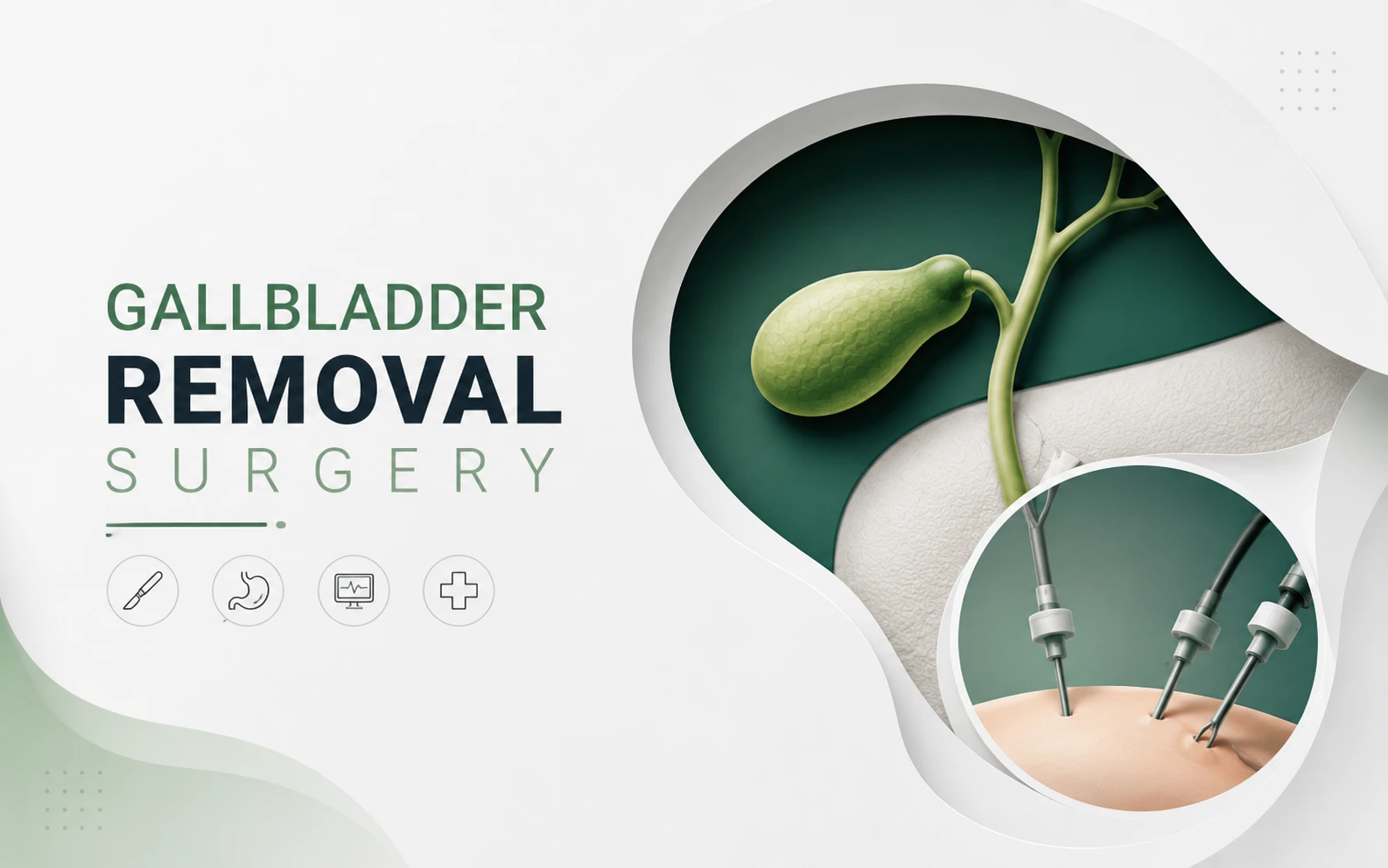
The gall bladder is a small, pear-shaped organ tucked just under the liver. Its job is to store and concentrate bile, a fluid that helps the body digest fatty foods. Problems begin when small, hard deposits called gallstones form inside it, usually made of cholesterol or bile pigments.
Many people carry gallstones without ever knowing it. Trouble starts when a stone blocks the flow of bile, triggering pain, inflammation, or infection. Left untreated, this can lead to serious complications such as cholecystitis (inflammation of the gall bladder), blocked bile ducts, or pancreatitis.
Why Gall Bladder Removal Surgery Is Needed
Doctors typically recommend removing the gall bladder, a procedure called a cholecystectomy, when gallstones cause:
-
Recurring pain in the upper right abdomen, especially after fatty meals
-
Nausea, vomiting, or bloating linked to gallstone attacks
-
Inflammation or infection of the gall bladder
-
Jaundice caused by a blocked bile duct
-
Gallstone-related pancreatitis
The good news is that the body functions perfectly well without a gall bladder. Bile simply flows more directly from the liver into the small intestine instead of being stored first.
Types of Gall Bladder Removal Surgery in Haryana
Laparoscopic Cholecystectomy (Keyhole Surgery)
This is the standard approach for most patients today. The surgeon makes three to four small incisions in the abdomen, through which a thin camera (laparoscope) and specialised instruments are inserted to remove the gall bladder. Because the cuts are small, patients generally experience less pain, a shorter hospital stay, and a quicker return to daily life compared with traditional surgery. The operation usually takes around one to two hours.
Open Cholecystectomy
In some cases, particularly where there's severe inflammation, extensive scarring, or complications, a single larger incision may be needed instead. Open surgery is also used if a laparoscopic procedure needs to be converted midway due to unexpected findings. This happens in only a small percentage of cases.
What Happens During the Procedure of Gall Bladder Removal
-
You will be given general anaesthesia, so you're asleep and pain-free throughout.
-
For laparoscopic surgery, the surgeon makes a few small cuts in the abdomen and inserts a camera along with surgical instruments.
-
Carbon dioxide gas is used to gently inflate the abdomen, giving the surgeon a clear view and room to work.
-
The gall bladder is carefully separated and removed through one of the small incisions.
-
The incisions are closed with stitches or surgical tape, and the procedure is complete.
Most patients are able to go home either the same day or after one night in hospital, depending on their overall health and the surgeon's assessment.
Recovery After Gall Bladder Surgery
Recovery from laparoscopic surgery is usually quick. Most people can resume light activities within a few days and return to work within one to two weeks, though full recovery can take three to four weeks. You may feel some shoulder or abdominal discomfort in the first day or two, which is a normal effect of the gas used during surgery. Doctors usually recommend a light, low-fat diet initially, gradually returning to normal eating as the body adjusts to functioning without a gall bladder.
Open surgery generally requires a longer hospital stay and a recovery period of several weeks.
Risks to Be Aware Of
As with any surgery, gall bladder removal carries some risks, including infection, bleeding, injury to nearby structures such as the bile duct, or the rare need to convert to open surgery. Your surgeon will discuss these risks with you beforehand and take precautions to minimise them. Complication rates for laparoscopic cholecystectomy are low, which is why it remains the preferred approach worldwide.
Cost of Gall Bladder Removal Surgery in Haryana
The cost of gall bladder removal surgery in Haryana typically depends on several factors:
-
Whether the surgery is laparoscopic or open
-
The hospital's facilities and location
-
The surgeon's experience
-
Length of hospital stay
-
Pre-operative tests, anaesthesia, and room category
Laparoscopic cholecystectomy costs in India generally range from around ₹40,000 to ₹1,50,000 or more, with the actual figure depending on the hospital and city. Costs in Haryana tend to be more affordable compared to metro cities, while still offering access to modern laparoscopic and stone removal techniques. It's always best to get a personalised cost estimate from your hospital after a consultation, since your specific case, insurance coverage, and any additional tests can affect the final amount.
Preparing for Gall Bladder Surgery
Before surgery, your doctor will usually order blood tests, an abdominal ultrasound, and sometimes additional imaging to confirm the diagnosis and plan the procedure. You'll be asked to fast for several hours before the operation and to inform your doctor of any medications you're taking, especially blood thinners. Arranging for someone to accompany you home afterward is also important, since you will not be able to drive yourself following anaesthesia.
Gall bladder problems can significantly affect your quality of life, but with modern laparoscopic techniques, gall bladder removal surgery is a safe, effective, and well-tolerated procedure with a quick recovery for most patients. If you're experiencing symptoms of gallstones, don't wait for a complication to force the issue. Consult an experienced surgical team, like the one at SS Kidney & Urology Hospital in Rewari, to discuss your diagnosis, treatment options, and next steps.
FAQs
Why is gall bladder removal surgery needed?
Gall bladder removal, or cholecystectomy, is usually recommended when gallstones cause recurring pain, nausea, inflammation, infection, jaundice from a blocked bile duct, or gallstone-related pancreatitis.
What is the difference between laparoscopic and open cholecystectomy?
Laparoscopic cholecystectomy uses a few small incisions and a camera, resulting in less pain and faster recovery. Open cholecystectomy uses a single larger incision and is reserved for cases with severe inflammation, scarring, or complications.
How long does gall bladder removal surgery take?
Laparoscopic cholecystectomy usually takes around one to two hours, and most patients can go home the same day or after one night in the hospital.
How long is the recovery after gall bladder surgery?
Most patients resume light activities within a few days and return to work within one to two weeks after laparoscopic surgery, with full recovery typically taking three to four weeks. Open surgery requires a longer recovery period of several weeks.
What does gall bladder removal surgery cost in Haryana?
Laparoscopic cholecystectomy in India generally costs between approximately ₹40,000 and ₹1,50,000 or more, depending on the hospital, surgeon experience, and length of stay. Costs in Haryana tend to be more affordable compared to metro cities.
Can the body function normally without a gall bladder?
Yes. The body functions well without a gall bladder, as bile simply flows more directly from the liver into the small intestine instead of being stored first.
What are the risks of gall bladder removal surgery?
Risks include infection, bleeding, injury to nearby structures such as the bile duct, and the rare need to convert to open surgery. Complication rates for laparoscopic cholecystectomy are low.






Request A Callback