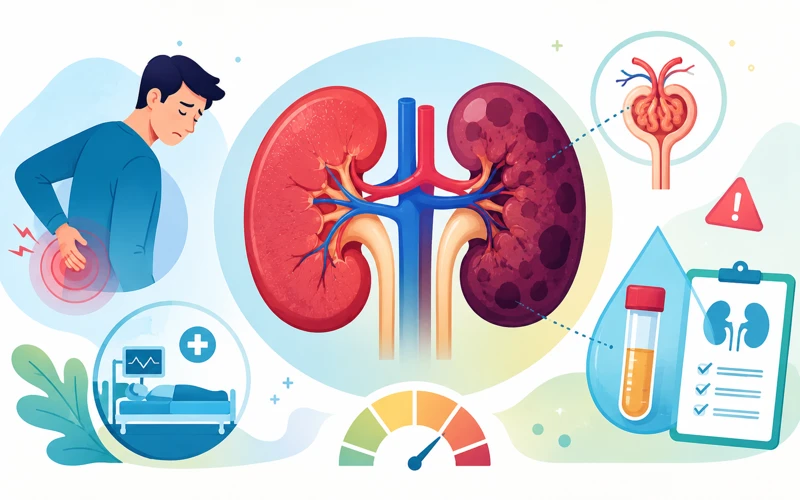
All the Acute Renal Failure Phases | Kidney Hospital in Haryana
10–15% of hospital admissions are affected by acute kidney injury (AKI), making it a major medical emergency condition worldwide says (NIDDK). Acute renal failure, also known as acute kidney injury, refers to a sudden decline in kidney function where the kidneys are unable to filter waste, balance fluids, and maintain electrolyte stability.
In clinical practice in Haryana, this condition progresses rapidly through distinct phases — initial injury, reduced urine output (oliguric phase), and recovery phase — each requiring different levels of medical intervention. Early recognition is critical because severe cases can lead to life-threatening complications if untreated.
This article explains the acute renal failure phases, their clinical signs, causes, and treatment approach, along with when patients should consult a kidney specialist in Haryana or visit a nephrology hospital in Haryana for immediate care.
What Is Acute Renal Failure (Acute Kidney Injury) in Haryana Patients
Acute renal failure, clinically known as acute kidney injury (AKI), is a sudden decline in kidney function where the kidneys lose their ability to filter waste products, regulate fluid balance, and maintain electrolyte stability.
In normal physiology, kidneys continuously remove toxins such as urea and creatinine from the blood. In AKI, this filtration process drops rapidly over hours to days, leading to the accumulation of waste in the body.
Acute kidney failure is commonly diagnosed in hospital settings due to infections, dehydration, drug toxicity, or reduced blood flow to the kidneys. It is frequently identified through rising serum creatinine levels and reduced urine output.
This condition is considered a medical emergency because kidney function can deteriorate quickly. Early detection and prompt care in a nephrology hospital in Haryana or consultation with a kidney specialist in Haryana is critical to prevent progression to severe phases requiring dialysis or intensive care.
Acute Kidney Failure Causes
Acute kidney failure develops when kidney function is suddenly disrupted due to reduced blood flow, direct kidney injury, or urinary obstruction. In Haryana patients, causes are often linked to infections, dehydration, and medication-related kidney stress.
Reduced Blood Flow to Kidneys (Pre-renal Causes)
-
Severe dehydration due to vomiting, diarrhea, or fever
-
Low blood pressure during surgery or trauma
-
Heart-related conditions reducing kidney perfusion
Direct Kidney Injury (Intrinsic Causes)
-
Severe infections affecting kidneys or bloodstream
-
Drug toxicity (especially painkillers and antibiotics in high doses)
-
Inflammatory kidney diseases
Urinary Blockage (Post-renal Causes)
-
Kidney stones blocking urine flow
-
Enlarged prostate in older males
-
Tumors or structural urinary tract obstruction
Signs of Acute Kidney Failure in Early Phase
Early signs of acute kidney failure often appear suddenly and may be mistaken for general illness or dehydration. In Haryana patients, these symptoms frequently lead to hospital visits once kidney function has already started declining.
-
Noticeable decrease in urine volume
-
Dark or concentrated urine
-
In severe cases, near absence of urine production
-
Swelling in feet, ankles, or face
-
Sudden weight gain due to fluid buildup
-
Puffiness around eyes
-
Persistent fatigue and weakness
-
Loss of appetite and nausea
-
Confusion or difficulty concentrating in advanced early phase
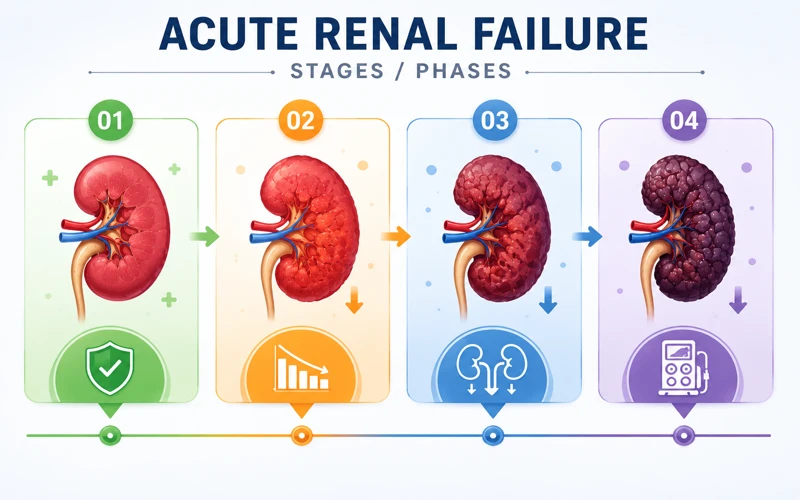
Acute Renal Failure Phases Explained (Stage 1–3 Progression)
Acute renal failure progresses through distinct clinical phases, each representing a different level of kidney dysfunction. In Haryana hospitals, this progression is monitored using urine output, serum creatinine levels, and overall patient condition.
Phase 1: Initial Injury Phase
-
Kidney injury begins but symptoms may be subtle
-
Serum creatinine starts to rise gradually
-
Urine output may still appear normal or slightly reduced
-
Early detection is critical in preventing progression
-
Clinical studies define AKI when creatinine rises by ≥0.3 mg/dL within 48 hours (NCBI StatPearls)
Phase 2: Oliguric Phase
-
Urine output drops significantly (<0.5 mL/kg/hour)
-
Waste products like urea and creatinine accumulate rapidly
-
Electrolyte imbalance (especially potassium increase) becomes common
-
This phase is clinically the most dangerous period
-
This phase typically develops within 1–7 days after injury onset (NCBI)
Phase 3: Recovery (Diuretic) Phase
-
Urine output gradually increases
-
Kidneys begin restoring filtration function
-
Electrolyte imbalance may persist temporarily
-
Full recovery depends on severity and underlying cause
-
Recovery may take 1–3 weeks or longer depending on kidney damage extent (clinical reference data)
Treatment of Acute Renal Failure in Haryana Hospitals
Treatment of acute renal failure depends on the phase of kidney injury, underlying cause, and severity of functional decline. In Haryana hospitals, the treatment is initiated to stabilize kidney function and prevent complications.
Initial Stabilization
-
Intravenous fluids are given if dehydration or low blood pressure is present
-
Blood pressure and electrolyte levels are continuously monitored
-
Nephrotoxic drugs are immediately discontinued
-
Underlying infections are treated with appropriate antibiotics
Cause-Specific Treatment
-
Pre-renal causes: Fluid replacement and improved blood circulation
-
Intrinsic kidney damage: Treatment of inflammation or infection
-
Post-renal obstruction: Relief of blockage using catheterization or surgery
Dialysis Support
-
Required when kidney function drops critically
-
Indicated when waste products and potassium levels become dangerously high
-
Temporary dialysis is common in severe acute cases
-
Performed in ICU or specialized nephrology units in Haryana hospitals
Conclusion
Acute renal failure progresses through clearly defined phases — initial injury, oliguric phase, and recovery phase — each reflecting the level of kidney dysfunction and urgency of medical care required. Early detection is critical because kidney injury can worsen rapidly, especially when urine output drops and toxins accumulate in the body.
Clinical evidence shows that AKI can often be reversible if treated promptly in the early stages. However, severe cases with prolonged oliguric phase may require dialysis support and intensive monitoring. Timely diagnosis through blood tests, urine output tracking, and imaging remains the key factor in preventing permanent kidney damage.
If you or your loved one is experiencing symptoms of acute kidney failure such as reduced urine output, swelling, fatigue, or abnormal blood reports, immediate medical attention is essential.
SS Kidney and Urology Hospital, one of the Best Nephrology hospital in Haryana provides specialized kidney care with advanced diagnostic and treatment facilities for acute and chronic kidney conditions. Visit SS Kidney and Urology Hospital, Haryana for timely evaluation and comprehensive kidney care.








Request A Callback