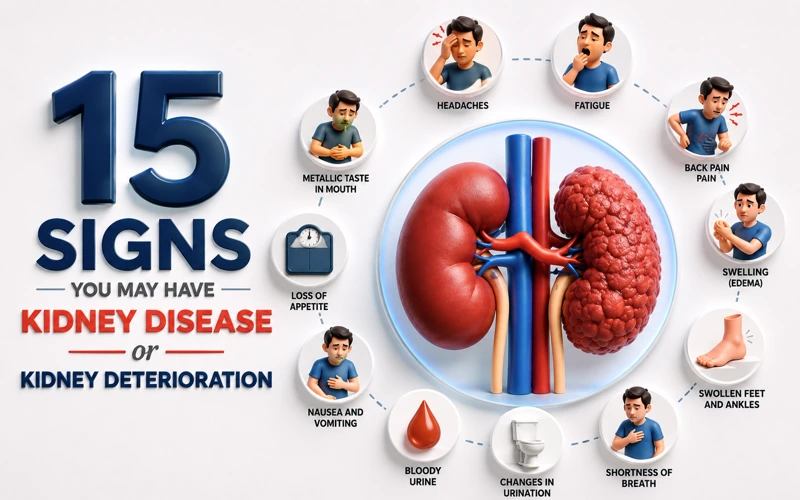
15 Signs You Have Renal Disease or Deteriorating Kidney
Approximately 1 in 7 adults are estimated to have chronic kidney disease (CKD), according to the CDC Chronic Kidney Disease Basics. Many patients do not notice symptoms during the early stages because kidney deterioration can develop gradually over months or years. By the time visible symptoms appear, kidney filtration function may already be significantly affected.
Early renal disease signs often include subtle changes such as fatigue, swelling, appetite loss, changes in urination, or muscle cramps. Many patients ignore these warning signs because they resemble common health problems.
Persistent symptoms should never be ignored, especially in patients with diabetes, high blood pressure, obesity, or a family history of kidney disease. Early diagnosis can help identify declining kidney function before severe complications such as kidney failure develop.
This guide explains 15 signs of renal disease or kidney deterioration, including early warning symptoms, advanced kidney failure indicators, and situations that require immediate nephrologist consultation in Haryana. It also explains when patients should consider visiting a kidney hospital or nephrology specialist for evaluation and diagnostic testing.
15 Signs You May Have Renal Disease or Kidney Damage
Approximately 15% of adults may develop chronic kidney disease during their lifetime, according to kidney health organizations and government health agencies. Kidney deterioration symptoms often develop gradually as filtration function declines.
1. Frequent Urination
Kidney damage can affect the body's ability to regulate fluid balance and urine production. Patients may notice:
-
Increased nighttime urination
-
Frequent urge to urinate
-
Difficulty controlling urination patterns
2. Foamy or Bubbly Urine
Protein leakage into urine may produce persistent foam or bubbles. This symptom can indicate kidney filtration damage.
3. Swelling in Feet and Ankles
Reduced kidney filtration can cause sodium and fluid retention. Swelling commonly affects:
-
Feet
-
Ankles
-
Lower legs
-
Hands
Persistent swelling may require evaluation by a nephrologist in Haryana.
4. Persistent Fatigue
Reduced kidney function may lower oxygen delivery and increase toxin buildup in the bloodstream. Patients often report:
-
Low energy
-
Weakness
-
Difficulty concentrating
-
Reduced physical endurance
5. Puffiness Around the Eyes
Protein loss through urine can contribute to fluid accumulation around the eyes, especially during morning hours.
6. Loss of Appetite
Advanced kidney deterioration may affect digestion and appetite regulation. Patients may experience:
-
Early fullness
-
Reduced hunger
-
Weight loss
-
Food aversion
7. Metallic Taste in the Mouth
Waste accumulation in the bloodstream may alter taste sensation. Many renal disease patients describe:
-
Metallic taste
-
Bad breath
-
Food tasting unusual
8. Persistent Nausea or Vomiting
Kidney failure symptoms may include digestive disturbances caused by toxin accumulation.
9. Muscle Cramps
Electrolyte imbalance caused by kidney dysfunction may trigger:
-
Leg cramps
-
Muscle spasms
-
Muscle pain
-
Weakness during movement
10. Persistent Itching
Kidney damage can disrupt mineral balance and waste removal, leading to generalized skin itching without visible rash.
11. Difficulty Sleeping
Patients with chronic kidney disease often report:
-
Restless sleep
-
Sleep interruptions
-
Daytime drowsiness
-
Difficulty falling asleep
12. Shortness of Breath
Fluid overload and reduced oxygen balance may cause breathing difficulties. Severe breathlessness requires immediate medical evaluation.
13. High Blood Pressure
Kidneys help regulate blood pressure. Kidney disease may cause persistent hypertension that becomes difficult to control.
14. Difficulty Concentrating
Reduced oxygen delivery and toxin buildup may affect brain function, leading to:
-
Confusion
-
Poor concentration
-
Memory problems
-
Mental fatigue
15. Chest Pain or Pressure
Fluid accumulation around the heart lining may cause chest discomfort in advanced kidney disease. Severe chest pain combined with swelling or breathlessness requires emergency medical attention.
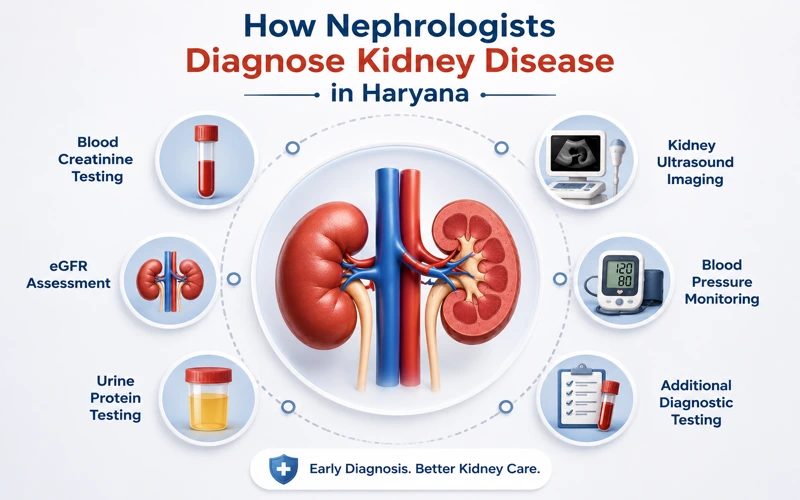
How Nephrologists Diagnose Kidney Disease in Haryana
Chronic kidney disease may remain undetected during early stages because symptoms often develop gradually. Nephrologists use multiple diagnostic tests to evaluate kidney filtration function, identify the cause of renal deterioration, and determine disease severity.
Blood Creatinine Testing
Creatinine is a waste product filtered by the kidneys. Elevated blood creatinine levels may indicate reduced kidney filtration. Nephrologists commonly use creatinine testing to:
-
Assess kidney function
-
Monitor disease progression
-
Evaluate treatment response
-
Detect worsening kidney failure
Blood creatinine testing is often combined with estimated glomerular filtration rate (eGFR) calculations.
Estimated GFR (eGFR) Assessment
eGFR estimates how effectively the kidneys filter waste from the bloodstream. Lower eGFR values may indicate worsening kidney damage. Nephrologists use eGFR results to:
-
Classify kidney disease stages
-
Monitor progression over time
-
Determine treatment planning
-
Assess dialysis risk
Patients with diabetes or high blood pressure may require regular eGFR monitoring.
Urine Protein Testing
Healthy kidneys usually prevent large amounts of protein from entering urine. Protein leakage may indicate kidney filtration damage. Urine testing may detect:
-
Proteinuria
-
Blood in urine
-
Infection markers
-
Kidney inflammation signs
Persistent abnormal urine findings may require further nephrology evaluation.
Kidney Ultrasound Imaging
Kidney ultrasound helps nephrologists evaluate kidney structure and identify physical abnormalities. Ultrasound imaging may detect:
-
Kidney swelling
-
Obstruction
-
Kidney stones
-
Structural damage
-
Reduced kidney size
Ultrasound testing is non-invasive and commonly used during renal disease evaluation.
Blood Pressure Monitoring
Kidney disease and high blood pressure frequently affect each other. Persistent hypertension can worsen kidney deterioration, while kidney disease may also increase blood pressure levels. Nephrologists often monitor:
-
Blood pressure patterns
-
Medication response
-
Fluid retention signs
-
Cardiovascular risk factors
Additional Diagnostic Testing
Depending on symptoms and medical history, nephrologists may also recommend:
-
Electrolyte testing
-
Blood sugar evaluation
-
Kidney biopsy
-
CT scan imaging
-
Autoimmune disease screening
Patients experiencing multiple kidney damage signs should consider evaluation at a nephrology hospital in Haryana before severe kidney failure develops.
Several adults may develop chronic kidney disease, yet many patients remain unaware until kidney function declines significantly. Early warning signs such as swelling, fatigue, foamy urine, muscle cramps, nausea, itching, and shortness of breath should never be ignored. Timely diagnosis and nephrologist evaluation may help identify kidney deterioration before severe complications such as kidney failure develop.
Patients experiencing persistent renal disease signs should consider early medical consultation, especially those with diabetes, hypertension, obesity, or family history of kidney disease. Regular kidney function monitoring and proper treatment planning can help manage disease progression more effectively.
SS Kidney and Urology Hospital provides nephrology and urology care for patients experiencing kidney disease symptoms, urinary disorders, and renal complications in Haryana. Patients experiencing persistent kidney damage signs or symptoms of kidney failure should consider professional nephrology evaluation at SS Kidney and Urology Hospital.
FAQs
What are the first warning signs of kidney disease?
The first warning signs often include fatigue, swelling in the feet or ankles, foamy urine, frequent nighttime urination, muscle cramps, and reduced appetite. These symptoms can develop gradually, so patients may ignore them during early kidney deterioration.
Can kidney disease happen without obvious symptoms?
Yes. Chronic kidney disease can remain silent in the early stages. Many patients notice symptoms only after kidney function declines significantly. Patients with diabetes, high blood pressure, obesity, or family history of kidney disease should consider regular kidney function testing.
When should I consult a nephrologist in Haryana?
Consult a nephrologist in Haryana if symptoms continue for more than a few days or appear together. Warning combinations include swelling with breathlessness, foamy urine with fatigue, high blood pressure with reduced urine output, or nausea with unexplained weight loss.
Does swelling always mean kidney failure?
No. Swelling can occur due to many causes, but kidney-related swelling often affects the feet, ankles, hands, face, or area around the eyes. Persistent swelling needs medical evaluation, especially when it appears with urination changes or high blood pressure.
Can kidney disease cause itching and sleep problems?
Yes. Kidney deterioration can cause toxin buildup and mineral imbalance. These changes may lead to persistent itching, dry skin, restless sleep, frequent nighttime waking, and daytime tiredness.
What tests help detect kidney deterioration?
Doctors commonly use blood creatinine, estimated GFR, urine protein testing, blood pressure monitoring, and kidney ultrasound. These tests help assess kidney filtration, protein leakage, fluid balance, and structural changes.
Who has a higher risk of renal disease?
Patients with diabetes, high blood pressure, obesity, cardiovascular disease, long-term smoking history, or family history of kidney disease have a higher risk. These patients may need earlier screening even without symptoms.








Request A Callback